Table of Contents
- Introduction
- Why Electric Tricycles Are Transforming Short-Distance Delivery
- Key Applications of Electric Tricycles for Cargo Delivery
- E-Commerce and Parcel Delivery
- Food and Grocery Distribution
- Cold-Chain and Temperature-Sensitive Logistics
- Construction and Hardware Supply
- Mobile Retail and Pop-Up Shops
- The Economics of E-Trike Delivery
- The Future of Urban Cargo Transport
- Conclusion
Introduction
As e-commerce continues to explode and cities grow increasingly congested, businesses are searching for smarter ways to move goods over short distances. Enter the electric tricycle — a three-wheeled electric vehicle that combines the agility of a bicycle with the cargo capacity of a small utility vehicle. Whether you call it an electric tricycle for adults, an e-trike, or an electric cargo trike, this vehicle category is rapidly becoming the go-to solution for last-mile and short-distance delivery worldwide.
From the narrow alleyways of Cape Verde to the congested streets of Manila and Nairobi, electric tricycles are proving that sometimes the best delivery vehicle isn’t a van or a truck — it’s a nimble, zero-emission trike that can go where larger vehicles simply cannot.
Why Electric Tricycles Are Transforming Short-Distance Delivery
The rise of the electric tricycle for adults in commercial delivery is no accident. These vehicles offer a unique combination of advantages that traditional delivery vehicles simply cannot match:
1. Urban Agility
Electric tricycles can weave through traffic jams, access narrow alleys, and park virtually anywhere. With turning radii as small as 2.4 meters, they can navigate spaces that would trap a delivery van. This means faster delivery times and more stops per route.
2. Impressive Cargo Capacity
Modern electric cargo trikes are built to handle serious payloads. The Fiat Tris, for example, can carry over 500 kg (1,100 lbs) of cargo. The Addmotor E-325 features a 36″L x 25″W x 23″H front cargo box with a 550 lb max payload. Some models support payloads of up to 550 kg.
3. Zero Emissions
As cities implement low-emission zones and governments push for greener logistics, electric tricycles offer a truly sustainable alternative. Replacing a petrol tuk-tuk with an electric trike can reduce between 10.81 and 43.24 kg of CO₂ per day.
4. Low Operating Costs
With no fuel costs and minimal maintenance requirements, e-trikes deliver dramatic savings. One logistics company in Nairobi replaced 10 petrol tuk-tuks with electric cargo trikes and saw monthly fuel costs drop from KES 120,000 to just KES 18,000 in charging costs — an 85% saving. Maintenance costs fell by over 60%.
Key Applications of Electric Tricycles for Cargo Delivery
E-Commerce and Parcel Delivery
This is the biggest use case for electric cargo tricycles today. Major logistics companies are deploying fleets of e-trikes for last-mile delivery. YADEA recently partnered with J&T Express Philippines to roll out 1,000 units of the YADEA ST13 — an electric delivery tricycle designed specifically for high-frequency, short-distance commercial delivery. The ST13 features a weight-reducing mesh cargo box that optimizes battery range.
In India, logistics giant Delhivery is deploying nearly 1,500 Bajaj electric cargo three-wheelers across its network, with plans to integrate them with automated route optimization systems. The Bajaj RIKI eCart is designed specifically for last-mile cargo operations, featuring an electric powertrain and lower maintenance requirements.
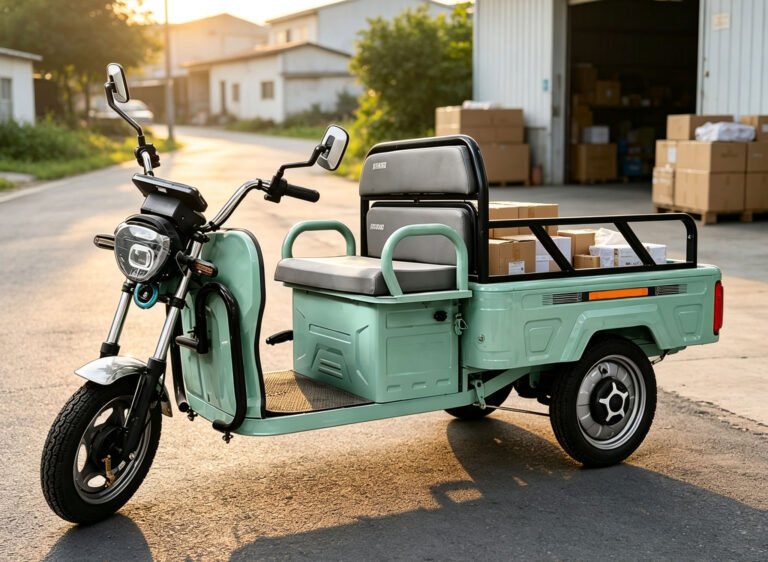
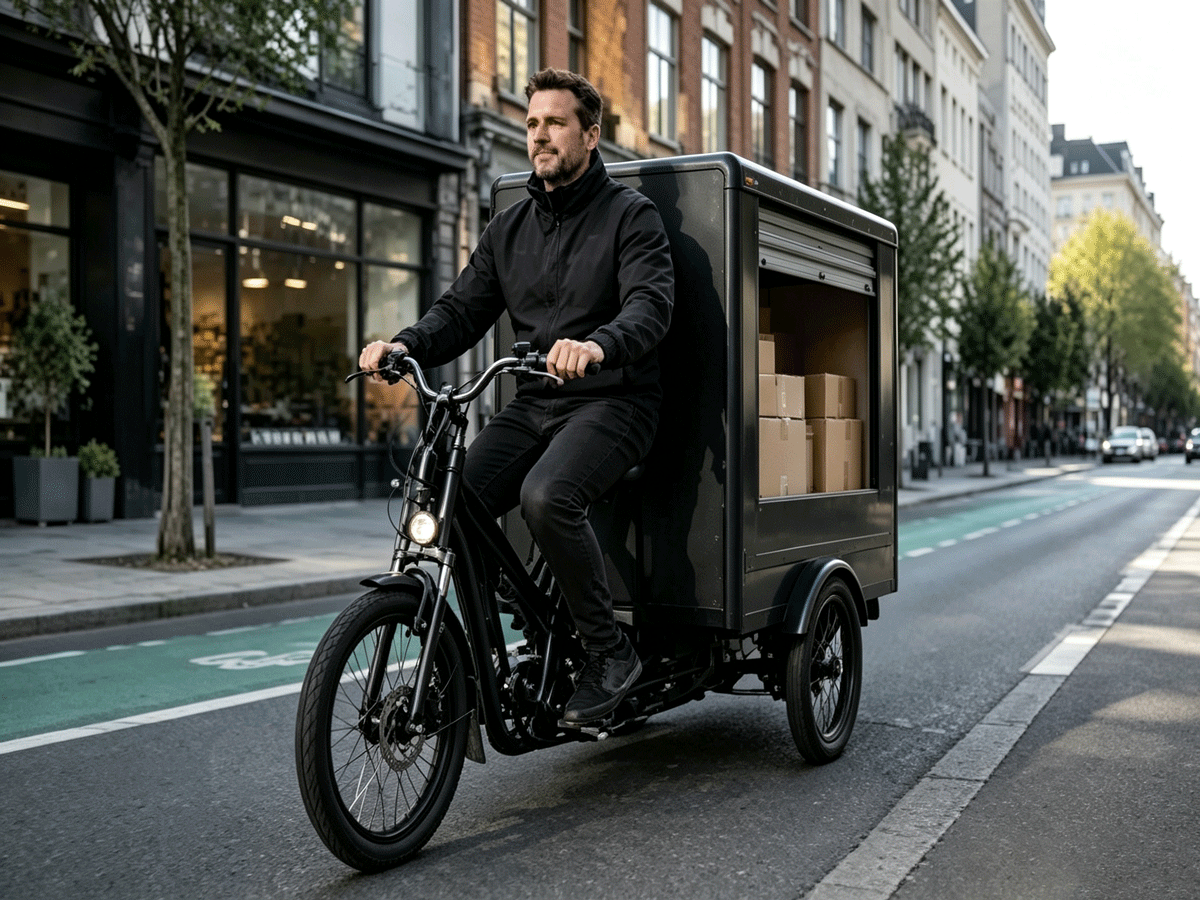
[Image suggestion: A modern electric cargo tricycle loaded with parcels, parked in an urban delivery zone — showing the cargo box and practical design]
Food and Grocery Distribution
Restaurants, grocery stores, and catering businesses are increasingly turning to electric tricycles for adults to handle food delivery. Fully-enclosed cargo boxes protect food from weather, dust, and contamination — a critical advantage over open motorcycles.
A catering company in Bangkok switched to enclosed electric tricycles for event deliveries across the city, ensuring that food arrived as fresh and clean as when it left the kitchen.
Cold-Chain and Temperature-Sensitive Logistics
Perhaps one of the most innovative applications is cold-chain delivery. iGO Wise Mobility and Daiots Arc have partnered to deploy 100 BeiGo X4 electric trikes for temperature-sensitive hyperlocal delivery in India, with plans to scale to 1,000 vehicles. The BeiGo X4 features a modular design that allows for cold-chain mounting options, making it ideal for delivering groceries, battery packs, and health beverages that require consistent temperature control.
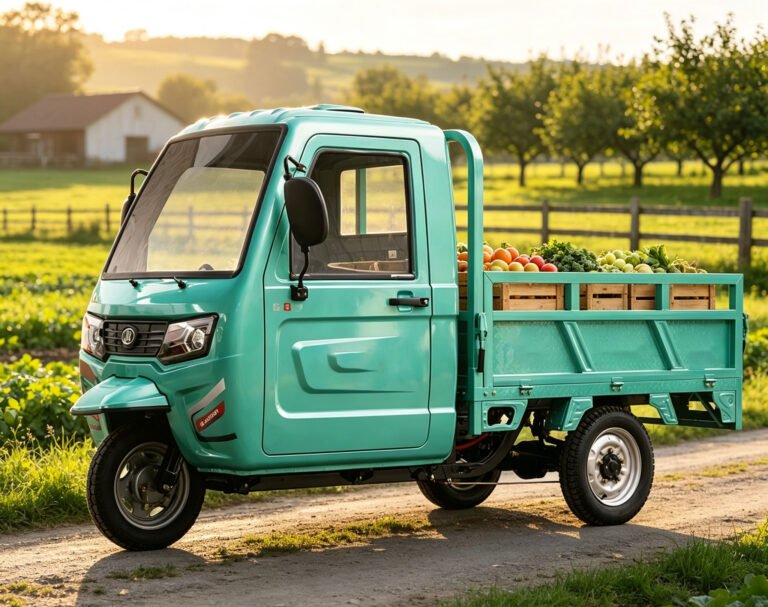
[Image suggestion: An electric tricycle with an insulated cargo box being loaded with fresh produce or temperature-sensitive goods]
Construction and Hardware Supply
Flatbed electric trikes are perfect for short-haul transport of construction materials — cement, timber, piping, and hardware from supplier to job site. Their compact size allows them to access construction sites in dense urban areas where larger trucks cannot enter.
Mobile Retail and Pop-Up Shops
Entrepreneurs are getting creative with electric cargo tricycles, using them as mobile storefronts for pop-up shops, farmers’ markets, and street vending. The enclosed cargo box can be customized to display products securely and attractively.
The Economics of E-Trike Delivery
The numbers tell a compelling story. Total cost of ownership for electric 3-wheelers is nearly 30–40% lower than internal combustion engine equivalents.
| Cost Metric | Electric Tricycle | Petrol/Diesel Van |
|---|---|---|
| Energy cost per km | $0.02–0.04 | $0.06–0.10 |
| Maintenance | Minimal (fewer moving parts) | Regular (oil changes, brake wear) |
| City access | Full (including bike lanes) | Restricted (low-emission zones) |
Energy costs for electric cargo 3-wheelers average $0.02–0.04 per kilometer compared to $0.06–0.10 per kilometer for diesel or CNG equivalents. Maintenance costs are similarly advantageous, with fewer moving parts, no oil changes, and reduced brake wear thanks to regenerative braking systems.
One outlet that switched from electric three-wheelers to vans estimated that short-distance transfer costs fell by about 30%.
[Image suggestion: A comparison infographic or chart showing the cost savings of electric tricycles vs. traditional delivery vehicles]
The Future of Urban Cargo Transport
The global electric trike market is experiencing unprecedented growth. According to industry analysts, the electric 3-wheeler cargo market is poised for sustained expansion through 2032, driven by:
- Explosive e-commerce growth requiring cost-effective, zero-emission delivery solutions
- Government incentives including subsidies, tax breaks, and preferential city access
- Declining battery costs — lithium-ion battery costs have fallen by over 80% in the past decade
- Battery-as-a-Service (BaaS) models reducing upfront capital requirements
China leads this transformation, with cities like Shenzhen and Shanghai integrating thousands of electric cargo trikes into urban delivery networks. Chinese manufacturers exported 390 million yuan worth of electric tricycles in the first five months of 2026 alone — a 99.3% year-on-year surge.
Conclusion
The electric tricycle for adults has evolved from a niche mobility solution to a mainstream commercial delivery vehicle. Whether you’re a small business owner looking to cut costs, a logistics company seeking greener operations, or an entrepreneur exploring new business models, the e-trike offers an unbeatable combination of affordability, agility, and sustainability.
As cities continue to grow and the demand for fast, efficient delivery intensifies, one thing is clear: the electric cargo tricycle is not just a trend — it’s the future of short-distance urban logistics.